Research & Analysis
Our music therapy app is grounded in academic research that demonstrates the effectiveness of music in improving sleep and mental health. Studies show music can enhance sleep quality, reduce anxiety, and support emotional regulation—especially among young adults and college students (Wang et al., 2014; Loewy, 2020; Yan et al., 2024). We've drawn on multiple sources, reviews, and trials to design a solution that is both evidence-based and user-centered.
References
Gassner, L., Geretsegger, M., & Mayer-Ferbas, J. (2021). Effectiveness of music therapy for autism spectrum disorder, dementia, depression, insomnia, and schizophrenia: Update of systematic reviews. European Journal of Public Health, 32(1), 27-34.
Loewy J. (2020). Music Therapy as a Potential Intervention for Sleep Improvement. Nature and science of sleep, 12, 1–9. https://doi.org/10.2147/NSS.S194938
Tang, Y. W., Teoh, S. L., Yeo, J. H. H., Ngim, C. F., Lai, N. M., Durrant, S. J., & Lee, S. W. H. (2022). Music-based intervention for improving sleep quality of adults without sleep disorder: A systematic review and meta-analysis. Behavioral Sleep Medicine, 20(2), 241-259.
Wang, C. F., Sun, Y. L., & Zang, H. X. (2014). Music therapy improves sleep quality in acute and chronic sleep disorders: A meta-analysis of 10 randomized studies. International Journal of Nursing Studies, 51(1), 51-62.
Yan, D., Wu, Y., Luo, R., & Yang, J. (2024). Bedtime music therapy for college students with insomnia: a randomized assessor-blinded controlled trial. Sleep Medicine, 121, 326–335. https://doi.org/10.1016/j.sleep.2024.07.018
Yasugaki, S., Okamura, H., Kaneko, A., & Hayashi, Y. (2023). Bidirectional relationship between sleep and depression. Neuroscience research, S0168-0102(23)00087-1. https://doi.org/10.1016/j.neures.2023.04.006
Chellappa, S. L., & Aeschbach, D. (2022). Sleep and anxiety: From mechanisms to interventions. Sleep medicine reviews, 61, 101583. https://doi.org/10.1016/j.smrv.2021.101583
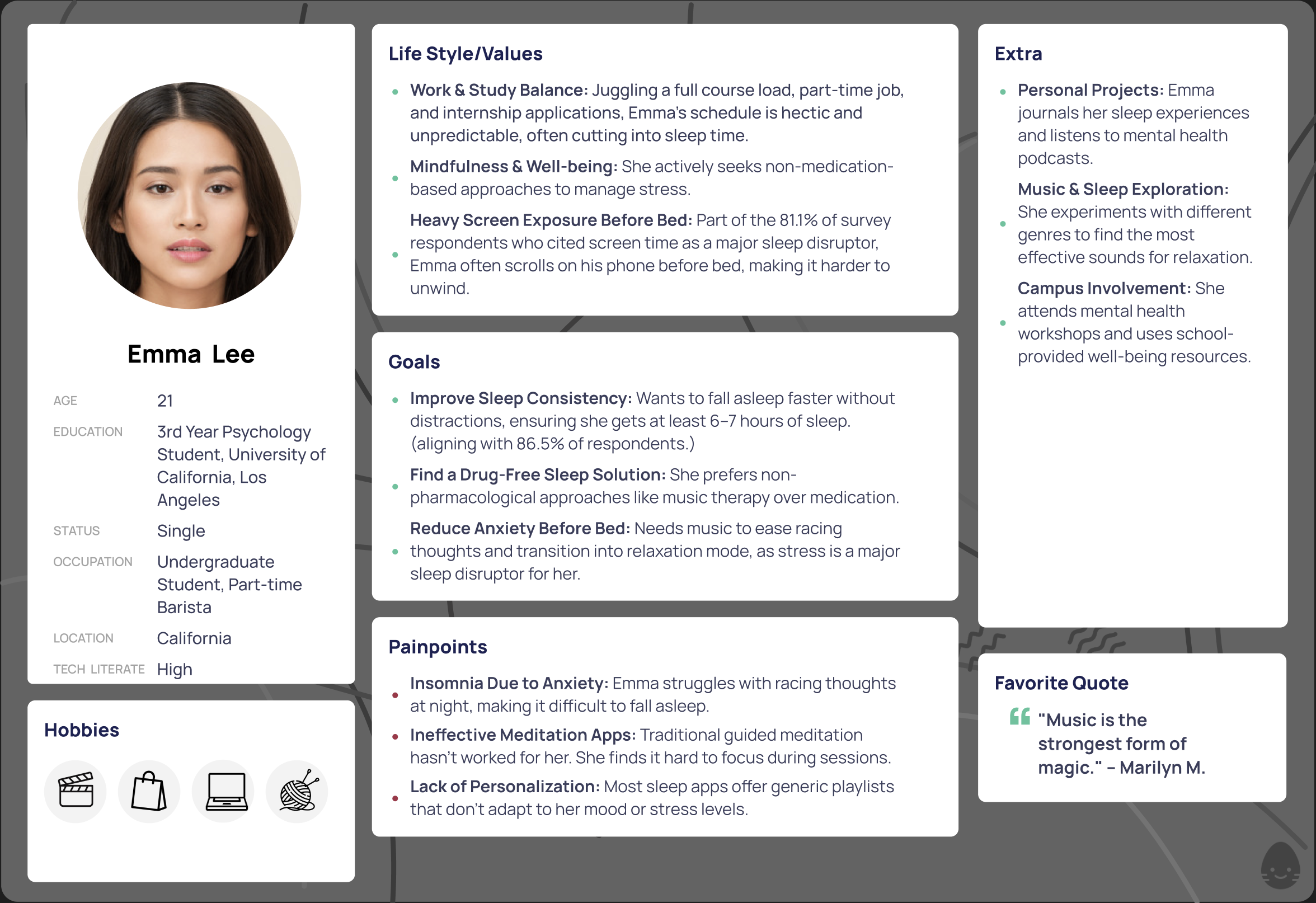
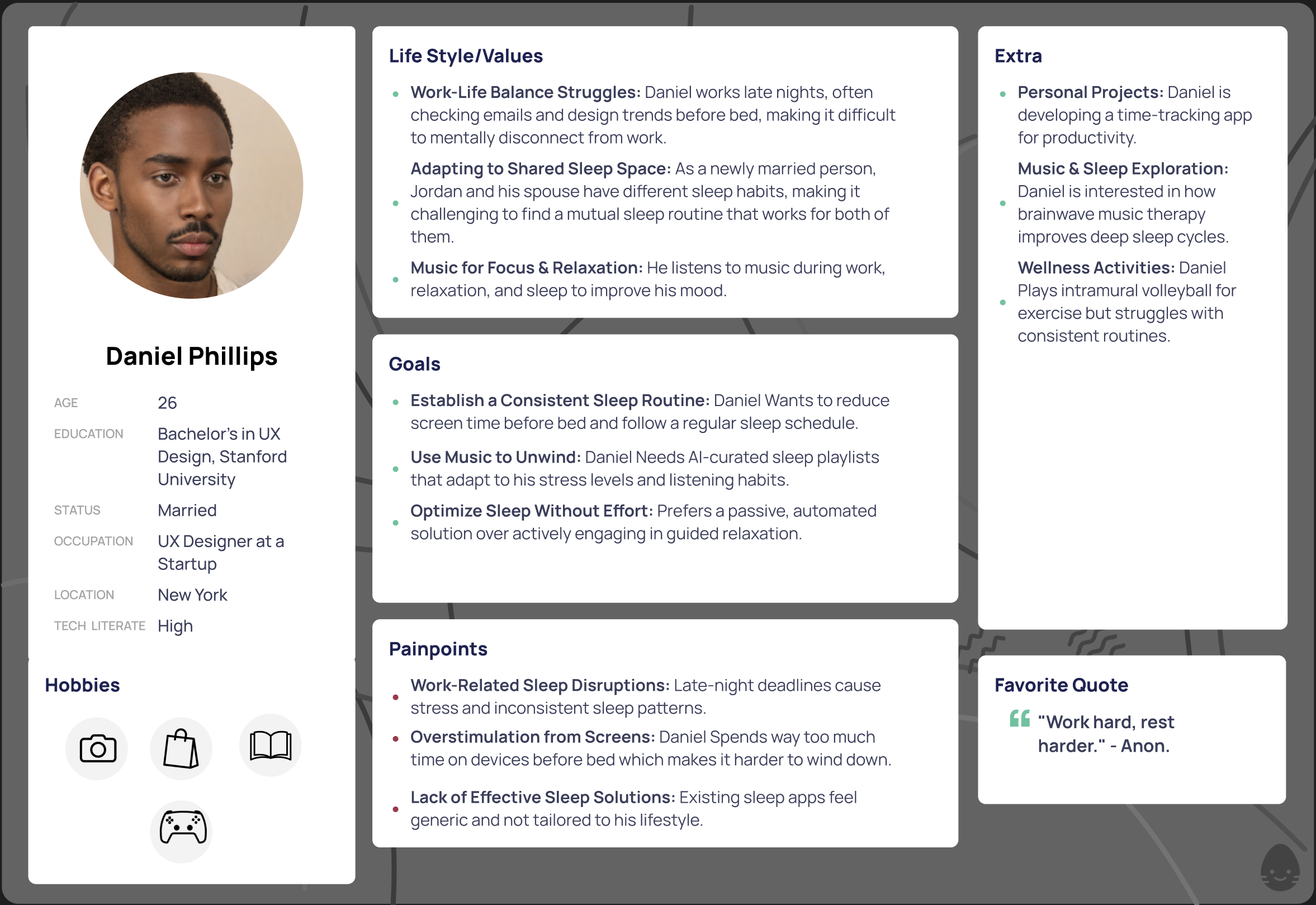
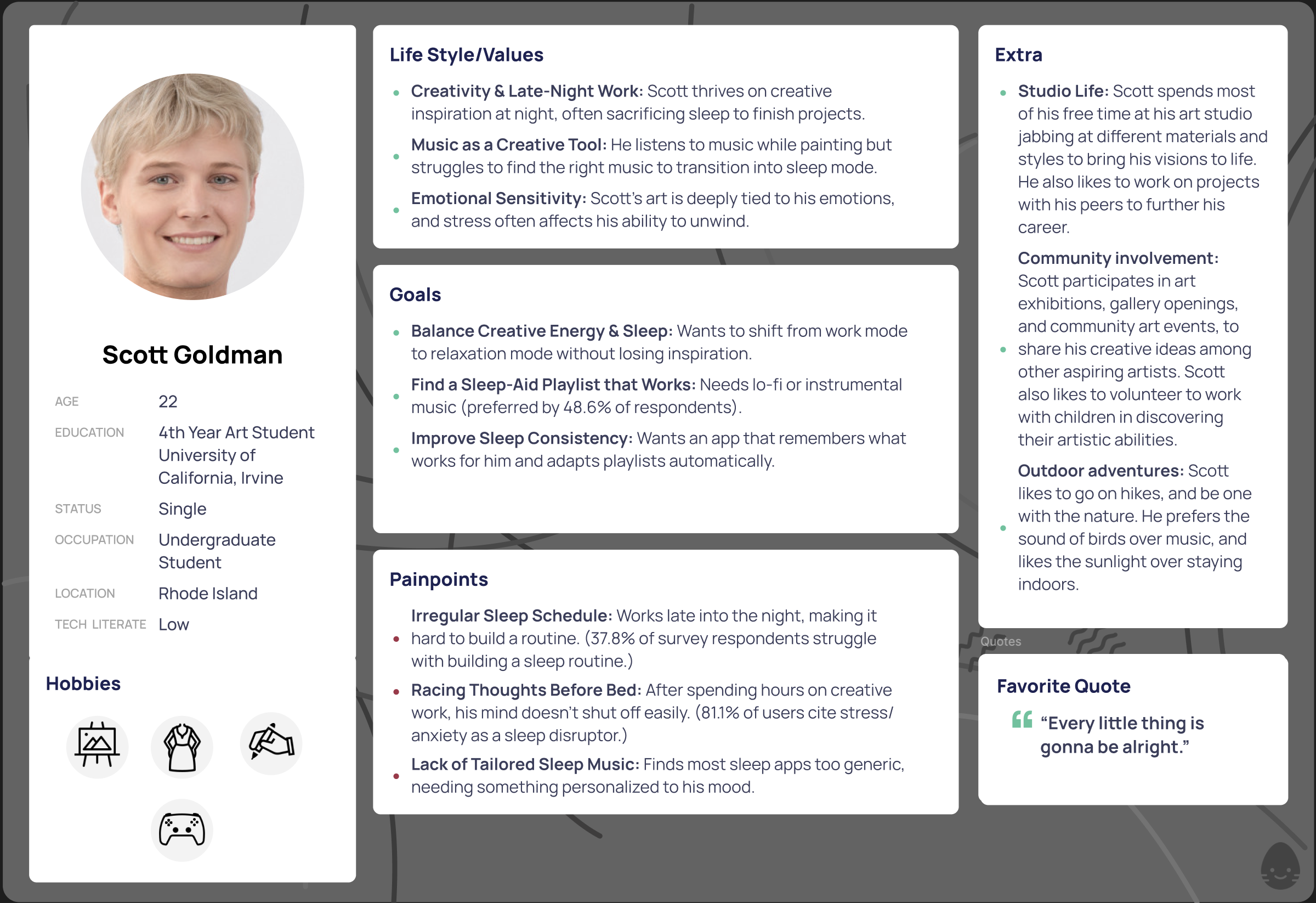
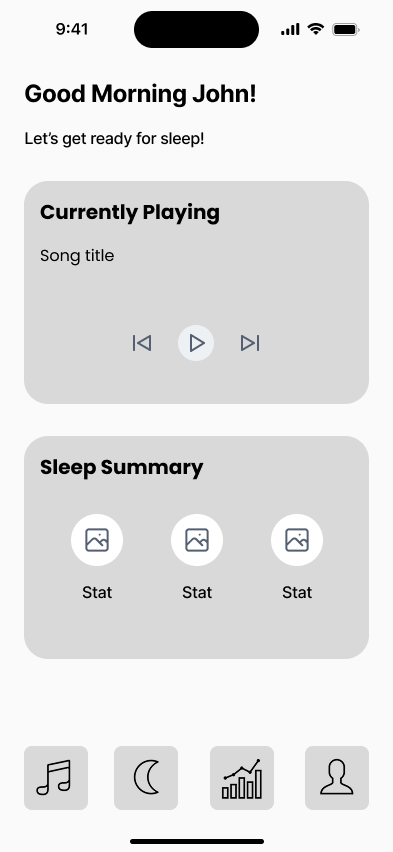
Our survey of young adults revealed key patterns in sleep habits and music preferences, helping shape Lullie's core features.
Sleep Difficulty Frequency
Music Usage for Sleep
Average Sleep Duration
User Insights
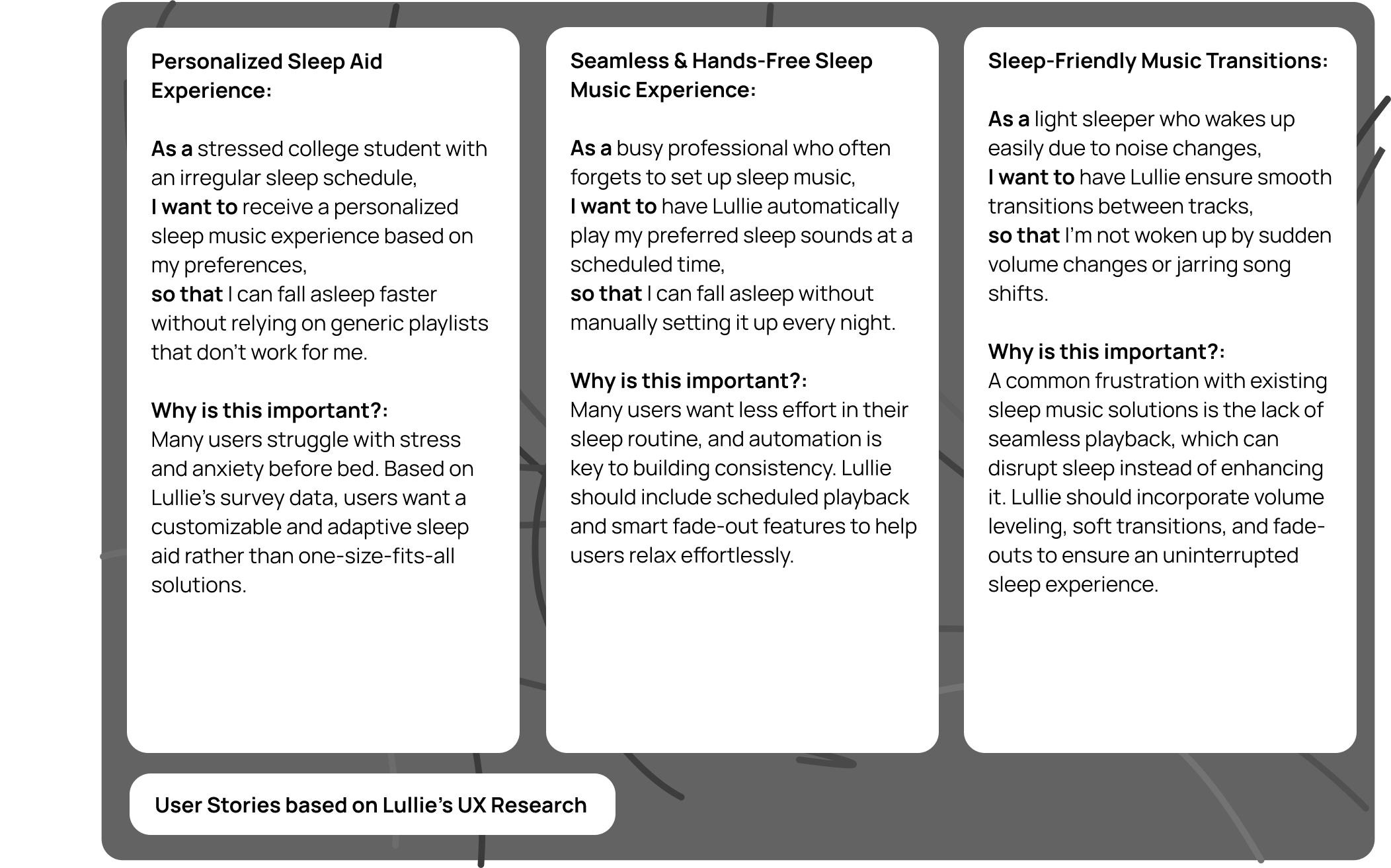
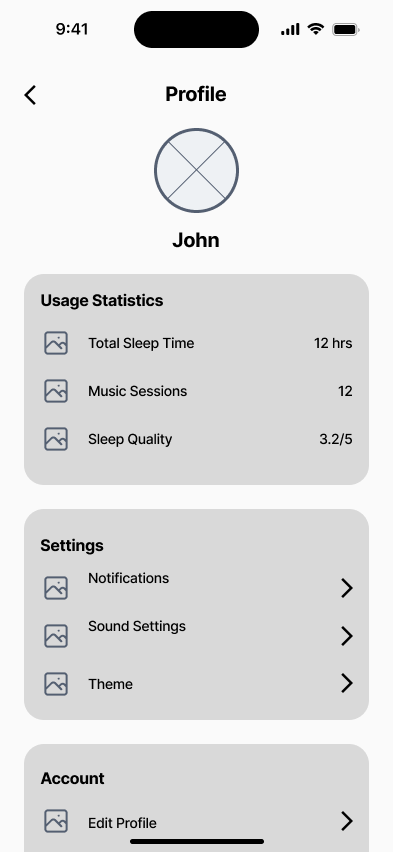
Through surveys and interviews, we uncovered rich insights into our users' sleep habits, mental health connections, and expectations from a sleep therapy app. These findings shaped the core experience of Lullie.
Mental Health & Sleep Are Deeply Connected
Users strongly affirmed the link between mental health and sleep quality. High stress, anxiety, and emotional states were commonly reported as major factors affecting their ability to fall asleep.
"I think it's important since if you feel sad then you'll just think about what's making you feel sad which can ruin your sleep."
"My mental health influences my sleep during periods of high stress and anxiety."
"When I don't get enough sleep I experience a bit of annoyance and anger."
Music as a Trusted Sleep Aid
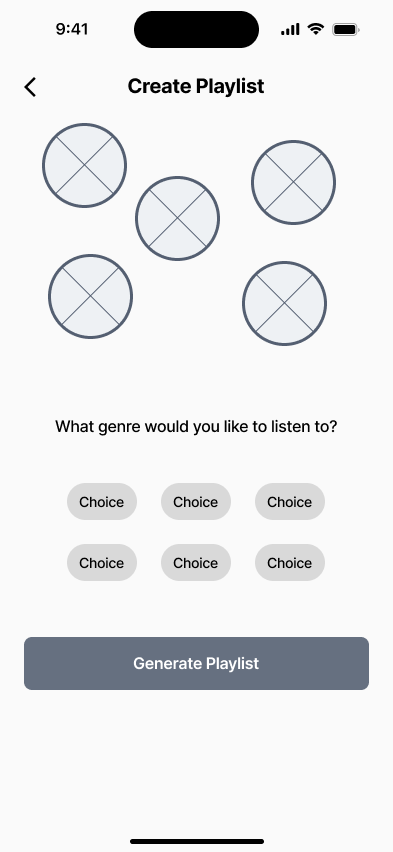
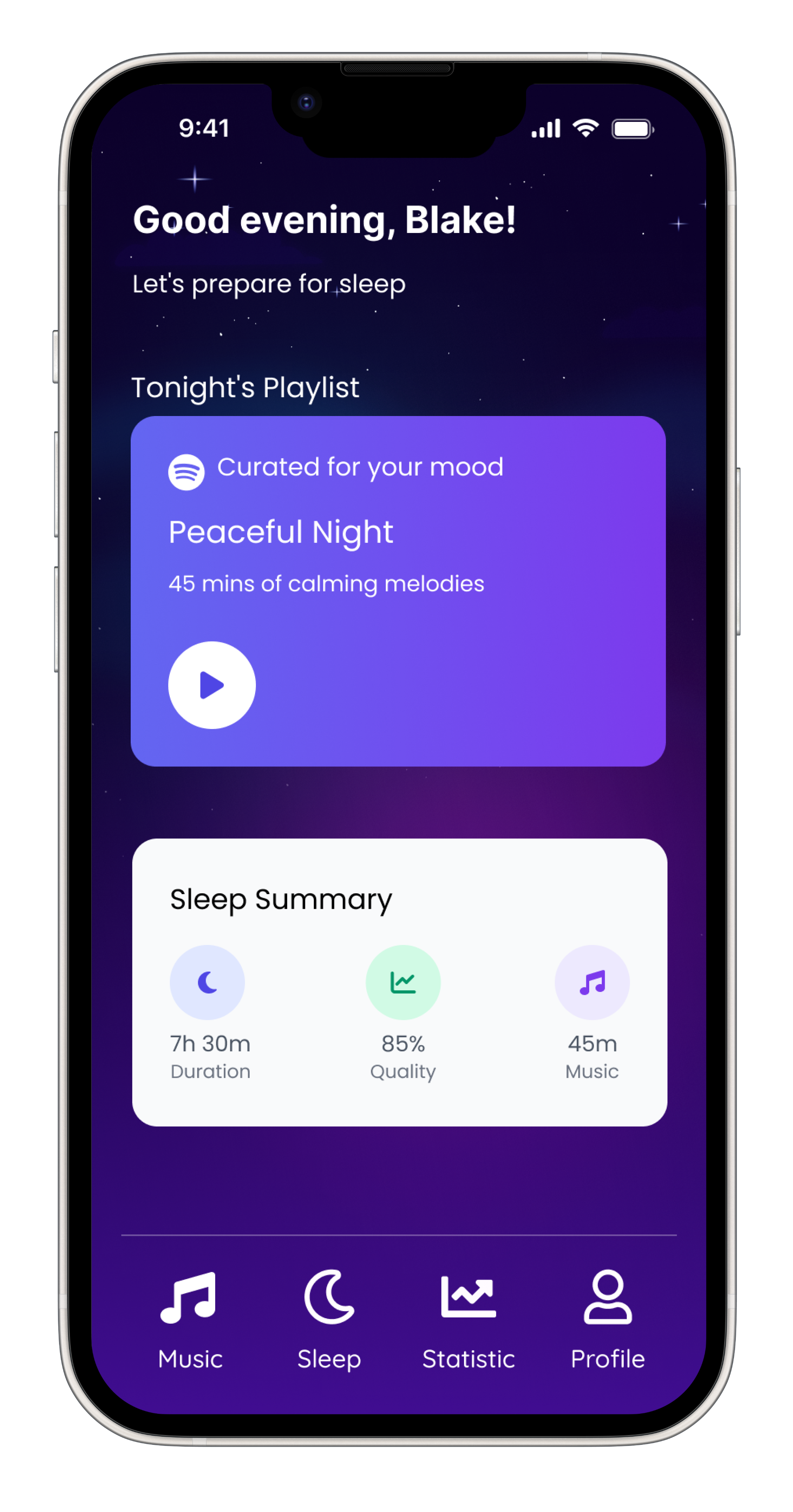
Many users already use or are open to using music for sleep. Familiarity with platforms like Spotify was common, but users expressed a desire for more personalized and soothing content.
"I like that it [sleep music] matches the vibe. It's super soothing which helps with trying to sleep."
"Finding the right music can be difficult at times."
Desire for Scientifically-Backed Solutions
Users voiced skepticism about the effectiveness of generic apps and stressed the importance of credible, research-backed features.
"There's a lot of conflicting information, which makes it hard to pick an app that's compatible with me."
"Good reviews and doctor-appointed information would make me trust a sleep app."
Need for Simplicity & Accessibility
When preparing for sleep, users want zero friction. Ease of use, minimal distractions, and customization were consistently highlighted as must-haves.
"Ease of use and accessibility are pretty important... you don't want to deal with any hassle."
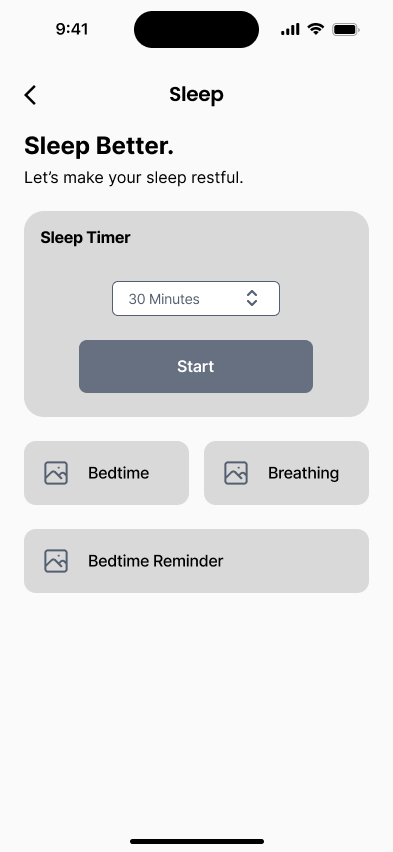
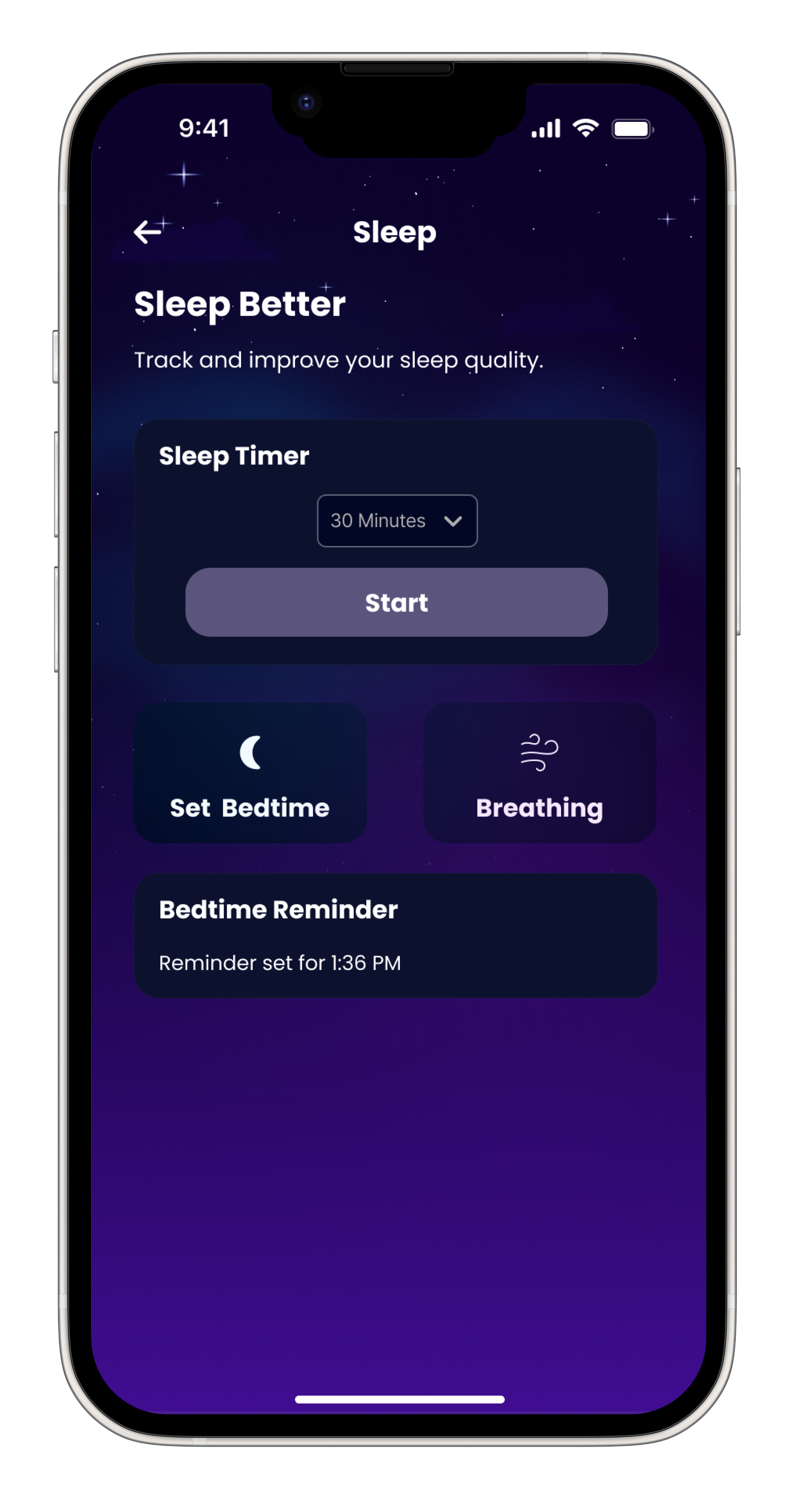
"An ideal app would have a set time for the music to play... it should automatically play or shut off."
Interview Deep Dive
Our interviews revealed additional themes that reinforced survey results:
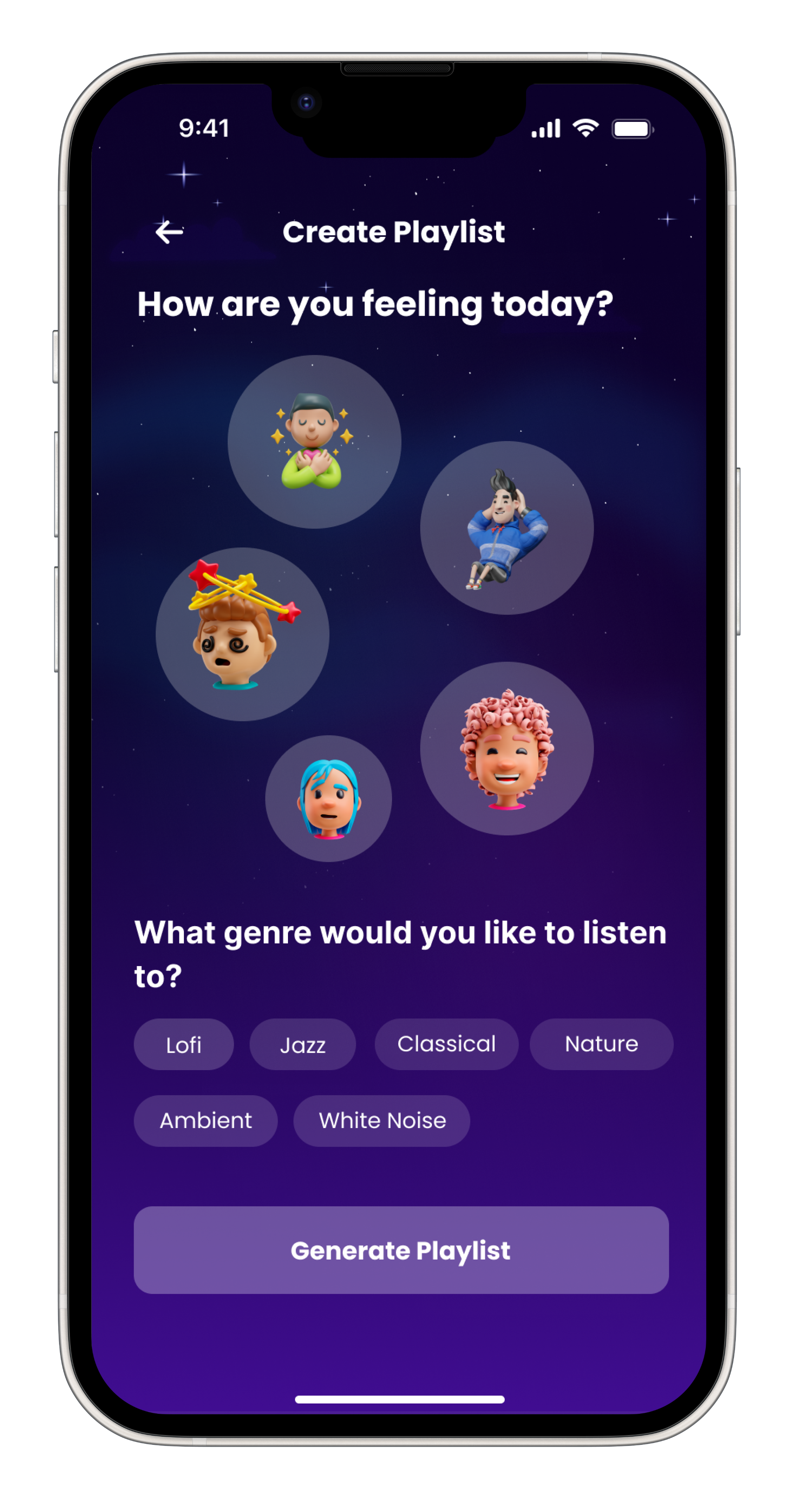
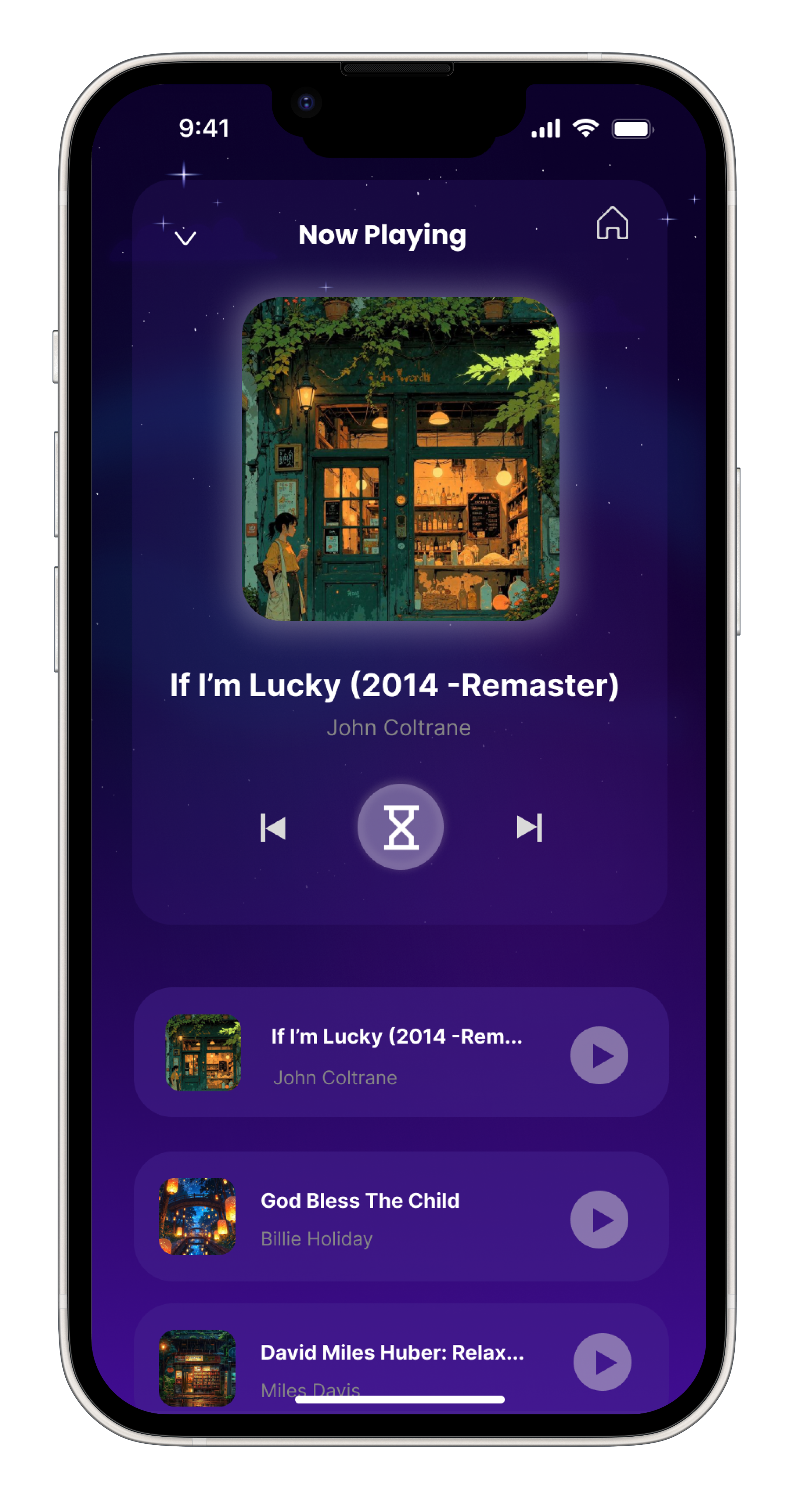
- Users prefer nature sounds and Lo-Fi as calming music genres.
- Many are interested in music therapy but are discouraged by paywalls and limited control.
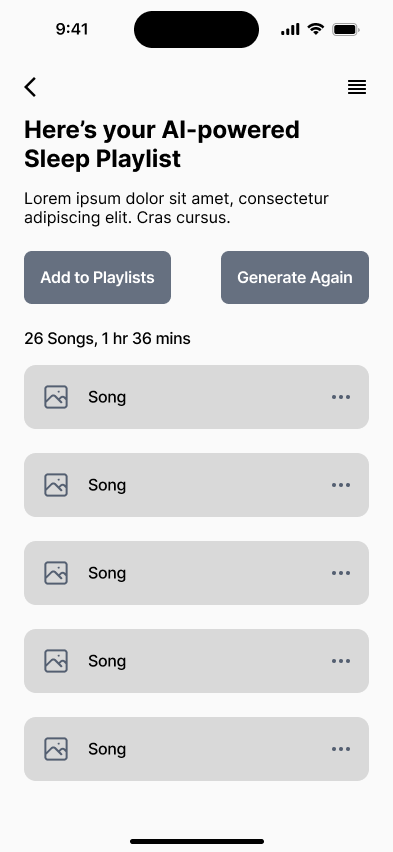
- Users crave features like long playlists, sleep timers, and custom music options.
These insights highlight the gap between user needs and current app offerings — reinforcing our goal of designing Lullie as a free, intuitive, and science-informed music therapy app that adapts to individual sleep journeys.